EU Approves €16.4 Billion for Hungary: What It Means for International Investors
Author
Deniz
Date Published
EU Approves €16.4 Billion for Hungary: What It Means for International Investors
Introduction
When the European Union commits €16.4 billion to a country, equivalent to 13% of its GDP, it sends an unambiguous signal: this is a market they believe in.
In May 2026, the European Commission approved Hungary's revised recovery plan, unlocking funds that had been frozen for years and marking a decisive turning point in Hungary's relationship with the EU. For international investors, particularly those from the Gulf seeking stable European opportunities, this development answers the most persistent question about Hungary: political risk.
The EU does not commit billions to unstable markets. This approval signals that Hungary is now fully integrated into Europe's investment framework, and that capital is already in motion.
The Funding Breakdown
The €16.4 billion package consists of three components, each addressing different aspects of Hungary's modernization:
Recovery and Resilience Facility: €10 Billion
The largest portion comes from the EU's post-pandemic Recovery and Resilience Facility. These funds are tied to specific reforms and investments that Hungary must implement, with 27 "super milestones" to be completed by August 2026.
Cohesion Funds: €4.2 Billion
These funds support regional development, infrastructure, and economic convergence with Western European standards. Their release followed progress on governance-related conditions.
Education and Infrastructure: €2.2 Billion
This tranche is linked to reforms in higher education and academic freedom, including measures related to public-interest foundations.
The combined €16.4 billion represents approximately 13% of Hungary's annual GDP — a substantial injection of capital that will flow through multiple sectors of the economy over the coming years.
Where Is the Money Going?
The Hungarian government has outlined specific allocation priorities that directly impact sectors relevant to real estate investors:
Transport Infrastructure, Healthcare, and SMEs: €4.2 Billion
Major investments in transport connectivity, healthcare facilities, and support for small and medium enterprises. Transport infrastructure improvements directly enhance property values in connected areas.
Railway Modernization and Rolling Stock: €1.8 Billion
Significant upgrades to Hungary's rail network, including suburban rail (HÉV) systems and new rolling stock. Railway improvements create value corridors and enhance accessibility to previously underserved areas.
Electricity Grid Upgrades: €1.5 Billion
Modernization of Hungary's power infrastructure to support both renewable energy integration and increased industrial demand, critical for data centers, manufacturing, and logistics facilities.
Rental Housing and Business Development: €2 Billion
Direct investment in housing supply and business infrastructure. This addresses Hungary's documented housing shortage while supporting commercial real estate development.
The Political Risk Question: Answered
For Gulf investors evaluating European opportunities, political risk has been the persistent concern regarding Hungary. Years of tension between Budapest and Brussels created uncertainty about Hungary's position within the EU framework.
The May 2026 approval fundamentally changes this calculus.
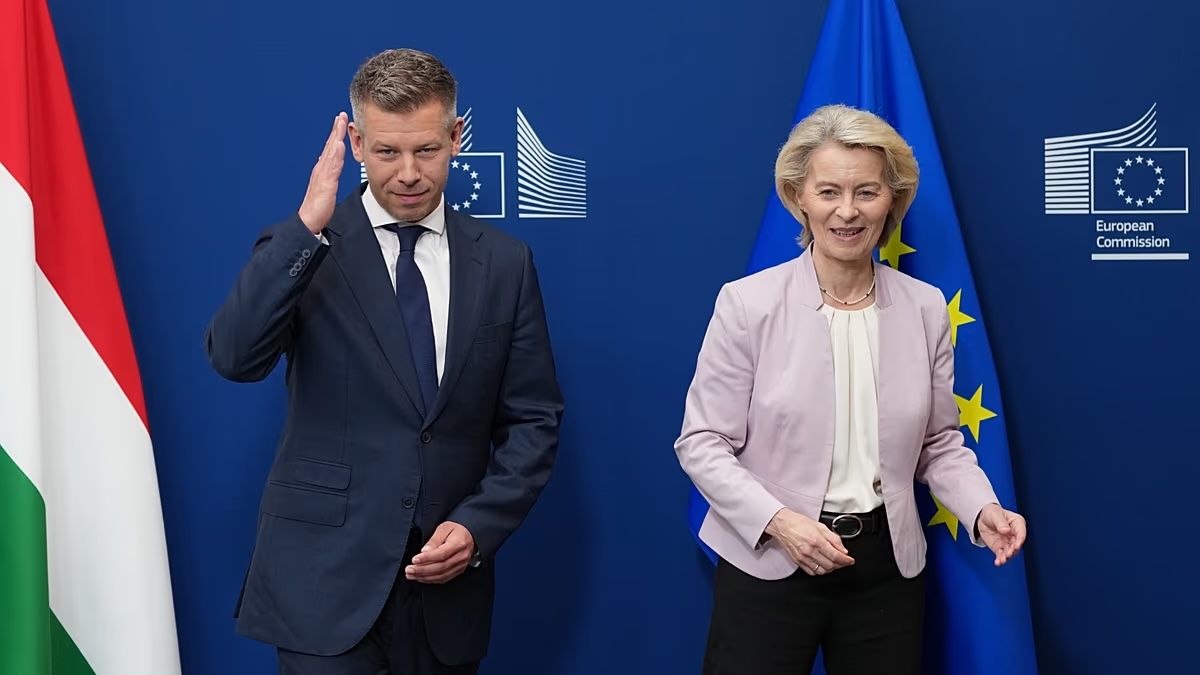
European Commission President Ursula von der Leyen announced the agreement alongside Hungarian Prime Minister Péter Magyar, stating that Hungary had established "a working structure focused on anti-corruption reforms and rule-of-law compliance." The conditions include Hungary joining the European Public Prosecutor's Office, strengthening its Integrity Authority, revising public procurement rules, and phasing out public-interest foundations.
The EU's willingness to release €16.4 billion, funds that had been frozen for years, demonstrates institutional confidence in Hungary's trajectory. This is not speculative optimism; it is capital commitment backed by the full weight of European institutions.
For international investors, this answers the political risk question definitively: Hungary is no longer an outlier. It is fully integrated into Europe's investment framework.
What This Means for Real Estate Investors
Every major sector receiving EU funding has direct implications for real estate values:
Transport Infrastructure
Railway modernization and transport investments create value corridors. Properties near upgraded rail connections, new stations, and improved highway access historically appreciate significantly above market averages. The €1.8 billion railway allocation will enhance connectivity between Budapest and secondary cities, opening new investment opportunities in emerging locations.
Energy Infrastructure
The €1.5 billion electricity grid upgrade supports Hungary's growing industrial base — particularly the battery manufacturing, electric vehicle, and logistics sectors that have driven recent FDI growth. Industrial and logistics real estate in areas with upgraded power infrastructure will command premium positioning.
Housing Development
The €2 billion allocation to rental housing directly addresses Hungary's documented supply shortage. Budapest alone needs approximately 20,000 new homes annually but has been delivering only a fraction of that demand. EU-backed housing investment creates opportunities across residential development, student accommodation, and build-to-rent sectors.
Healthcare Infrastructure
Healthcare facility investments support both medical real estate development and the broader wellness tourism sector. Budapest's position as a regional healthcare destination is strengthened by EU-backed modernization.
The Broader Context: Why Hungary
The EU funding approval arrives in the context of Hungary's already-strong investment fundamentals:
Lowest Corporate Tax in the EU
Hungary's 9% corporate tax rate, reduced from 19% in 2017, remains the lowest in the European Union, providing significant cost advantages for international investors.
Record Foreign Direct Investment
Hungary's foreign direct investment stock has reached 116% of GDP, ranking 6th in the EU. Major investments from CATL, BMW, and BYD in Debrecen and Szeged demonstrate global corporate confidence.
Strategic Central European Position
Hungary's location at the heart of Europe provides access to both Western and Eastern markets, making it ideal for logistics, manufacturing, and regional headquarters.
Growing Tourism Sector
Budapest recorded 9.9 million guest nights in 2025, surpassing pre-pandemic records. The hospitality sector continues to attract international investment, with brands like Mandarin Oriental, St. Regis, and SO/ by Accor entering the market.
The EU funding approval reinforces these fundamentals while removing the political uncertainty that had previously given some investors pause.
The Investment Window
The timing of this approval creates a specific opportunity window:
Implementation Timeline
Hungary must meet its 27 super milestones by August 2026, with payment requests submitted by September and payments made by December. This compressed timeline means capital will flow quickly through the economy.
Early Mover Advantage
Investors who position before the full impact of EU funding materializes will capture the greatest value appreciation. Infrastructure improvements, housing developments, and commercial projects backed by EU capital will enhance surrounding property values, but the benefits accrue most to those already positioned.
Reduced Risk Premium
As Hungary's full integration into the EU framework becomes established, the risk premium that international investors previously applied will compress. Properties acquired now, before this normalization is fully priced in, offer asymmetric return potential.
Sectors to Watch
Based on the EU funding allocations and Hungary's existing investment dynamics, several sectors merit particular attention:
Logistics and Industrial
EU-backed electricity grid upgrades combined with Hungary's position in the electric vehicle and battery supply chain create strong fundamentals for logistics and industrial real estate. Areas near Debrecen, Szeged, and the M1/M7 corridors are particularly well-positioned.
Residential Development
The €2 billion housing allocation addresses documented supply shortages. Build-to-rent, student accommodation, and residential development projects align directly with EU priorities and domestic demand.
Hospitality
Budapest's record tourism numbers and the entry of global luxury brands signal sustained hospitality sector growth. EU-backed infrastructure improvements, particularly rail and transport — will enhance tourism accessibility.
Healthcare Real Estate
Healthcare infrastructure investment supports both medical facility development and the broader wellness tourism sector that has become part of Budapest's identity.
Conclusion: The Signal Is Clear
The European Union's approval of €16.4 billion for Hungary is not merely a financial transaction. It is a statement of institutional confidence in Hungary's trajectory and its integration within the European framework.
For Gulf investors seeking stable European opportunities with strong fundamentals, this approval removes the primary source of uncertainty that had surrounded Hungary. The political risk question is answered. The capital is committed. The implementation timeline is defined.
Railways. Energy. Housing. Infrastructure. Every sector that drives real estate value is receiving direct EU funding.
The window is open. The question is whether you will be positioned to capture the value as it materializes.