China's Top Investment Destination in Europe: Hungary
Date Published
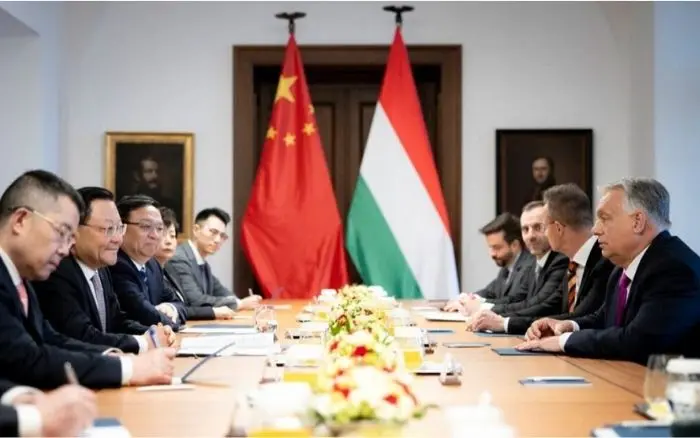
Over the past 15 years, Hungary has emerged as the leading destination for Chinese foreign direct investment in Europe. This transformation is the result of deliberate economic policy, strategic geographic positioning, and an investment-friendly regulatory environment.
In 2024, Hungary alone accounted for 31 percent of all Chinese investment in Europe, a remarkable concentration for a country of just 9.5 million people. This strategic positioning creates significant opportunities not only in manufacturing and technology but also in real estate investment.
The Eastern Opening Policy: Foundation of Strategic Transformation
A 15-Year Economic Strategy
Since 2010, Hungary has pursued an economic strategy known as the "Eastern Opening Policy," designed to expand trade and investment relationships with rapidly growing Asian economies.
The Eastern Opening policy has had a significant impact on the investment decisions of Chinese and Indian investors due to four factors: high-ranking political meetings, strategic cooperation agreements, cash grants from the Hungarian government, and supportive services from HIPA (Hungarian Investment Promotion Agency).
Record Investment Inflows
Hungary attracted Chinese investments worth €3.9 billion in 2025, up from €3.2 billion in 2024. In 2025, China was Hungary's largest source of foreign investment for the third consecutive year, accounting for 57 percent of total inflows.
Between 2014 and 2025, Hungary became the world's second-largest recipient of Chinese foreign direct investment in electric vehicle manufacturing, trailing only Indonesia, receiving $18 billion in investments during this period.
Why Chinese Investors Choose Hungary
Strategic Location Advantage
Hungary sits at the geographic center of Europe, providing manufacturers with rapid access to the entire European market. For Chinese companies, this translates to optimized distribution across the continent while maintaining competitive production costs.
Cost-Efficiency with High Productivity
Compared to Western Europe, Hungary offers lower labor costs and operational expenses while delivering high manufacturing quality. This balance makes it an attractive proposition for large-scale production investments.
Investment-Friendly Policies
Unlike some EU members, the Hungarian government actively supports Chinese firms with fiscal incentives, such as tax exemptions and customs relief. Hungary's 9 percent corporate tax rate, the lowest in the European Union — further enhances its appeal.
Major Chinese Investments Reshaping Hungary
CATL — Europe's Largest Battery Gigafactory
CATL's battery plant is considered the largest single investment in Hungary's history. The €7.3 billion battery gigafactory in Debrecen, one of the largest in the EU, is scheduled to begin production in early 2026.
BYD — First European Passenger Car Factory
BYD first opened an electric bus factory in Hungary in 2017, built a nearly $5 billion EV production base in Szeged in 2024, and relocated its European headquarters from the Netherlands to Hungary in 2025. Trial production for its first European passenger car plant began in January 2026, with mass production expected by Q2 2026.
Additional Major Investors
Three of the ten largest ongoing Chinese investment projects in Europe: CATL, BYD, and Sunwoda Electronic, are located in Hungary.
Since 2020, China has been Hungary's largest source of foreign investment. Beginning in 2022, several Chinese industrial giants, including CATL, BYD, EVE Energy, and XINWANDA, have established major factories in Hungary, especially in EV and EV battery production.
Impact on Hungary's Economy
Employment Growth
Large-scale factory investments are creating thousands of direct jobs. CATL's plant in Hungary is expected to provide 9,000 jobs. This employment growth accelerates population increases in industrial cities and generates broader economic activity.
Industrial and Technology Development
Investments in advanced technology sectors, particularly automotive and battery production, are strengthening Hungary's industrial infrastructure and positioning the country at the forefront of the electric vehicle revolution.
Supply Chain Expansion
Major investments attract hundreds of suppliers and supporting industries. BYD's electric bus plant in Komárom, operational since 2017, initially sourced around 20 percent of its components from European suppliers, but that number rose to 30–50 percent by 2019. This creates a multiplier effect throughout the economy.
What This Means for Real Estate Investors
Rising Demand for Housing
Factory investments drive employment, which increases population in industrial regions. This directly elevates demand for residential properties, particularly in cities hosting major manufacturing facilities such as Debrecen, Szeged, and Győr.
Logistics and Commercial Space Opportunities
Growing production capacity creates sustained demand for logistics centers, warehouses, and commercial facilities. Investors can capitalize on this through industrial land acquisitions and logistics property development.
Long-Term Capital Appreciation
The continuous flow of foreign investment supports stable, long-term appreciation in property values. Strategic positioning in growth corridors offers investors both income generation and capital gains potential.
Key Investment Sectors
Hungary's Chinese investment-driven growth highlights several high-potential sectors:
— Residential properties serving the expanding workforce
— Industrial land in strategic locations
— Logistics and warehousing facilities
— Commercial real estate for supporting businesses
Leading Investment Destinations
Debrecen — Home to CATL's gigafactory and BMW's electric vehicle plant; Hungary's fastest-growing industrial hub
Szeged — BYD's European passenger car production base and headquarters; emerging southern industrial corridor
Győr — Audi's primary production center; mature automotive ecosystem
Budapest — Management headquarters, logistics coordination, and residential center for the broader industrial ecosystem
Conclusion: Asia's Capital Gateway = High-Return Investment Opportunity
China's concentrated investment in Hungary has transformed the country into one of Europe's most important economic centers. This is creating opportunities not only in manufacturing but also in real estate investment.
With the right location and strategy, Hungary offers investors a powerful market with significant return potential. The convergence of Asian capital, European market access, and favorable investment conditions positions Hungary as a strategic choice for international investors.
Frequently Asked Questions
Why does China invest more in Hungary than any other European country?
Hungary's strategic location, competitive cost structure, and investment-friendly policies make it the most efficient production and distribution hub for Chinese companies entering the European market.
How do Chinese investments affect the Hungarian economy?
They drive employment growth, industrial development, and increased demand for real estate, accelerating economic expansion across multiple sectors.
Is investing in Hungary a sound decision?
Yes. Rising foreign investment supports long-term value appreciation and creates sustained demand across residential, commercial, and industrial property sectors.
Which sectors are growing fastest?
Automotive, battery production, logistics, and real estate are the fastest-growing sectors driven by Chinese investment.
Can foreign investors easily invest in Hungary?
Yes. Hungary's investor-friendly policies and EU membership provide a transparent, accessible framework for international investors.
Which investments offer the highest returns?
Residential properties serving industrial workforces, industrial land in strategic locations, and logistics facilities offer the strongest return potential.
Explore Investment Opportunities
Discover industrial, logistics, and residential investment opportunities across Hungary's key growth regions with Aszena Invest.