Bosch and Mercedes Are Moving From Germany to Hungary.
Author
Deniz
Date Published
Introduction
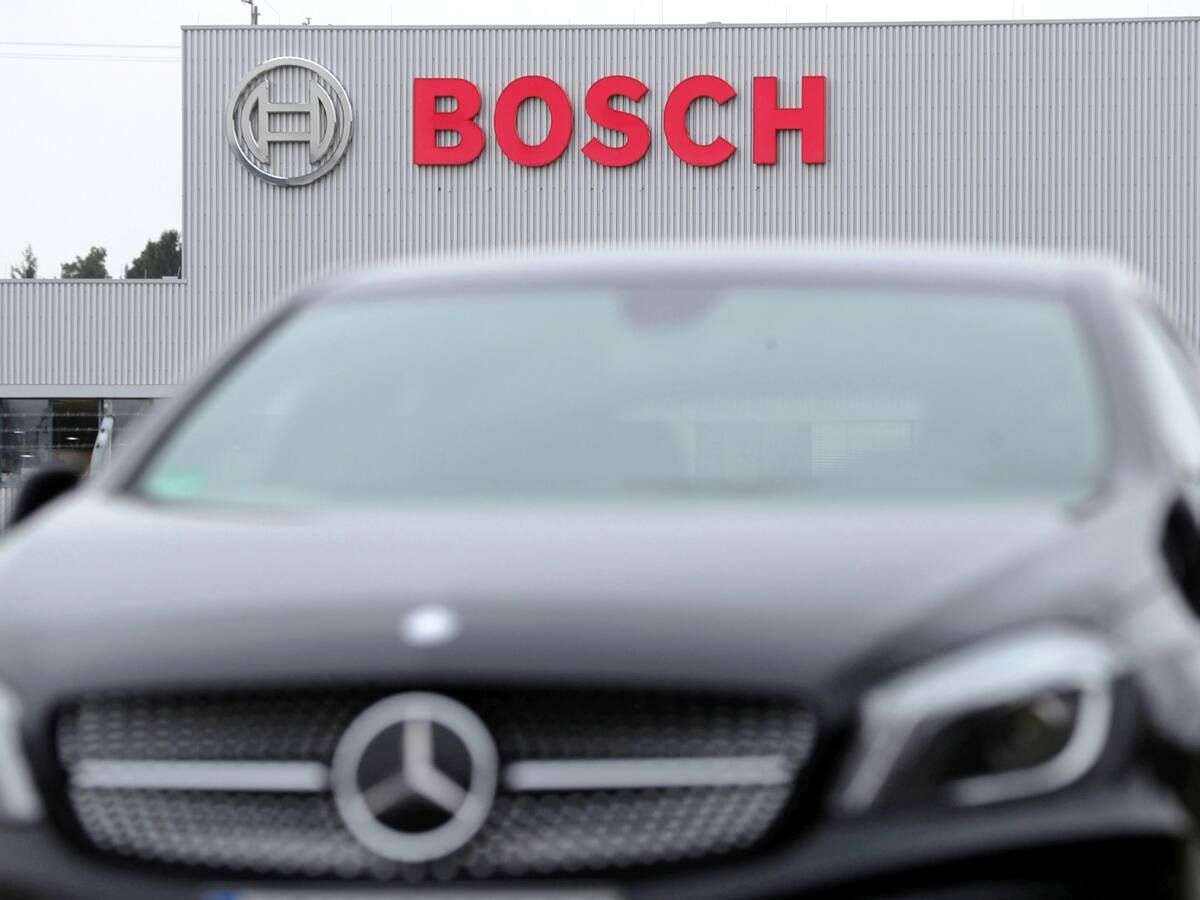
Bosch is closing two major factories in Germany. Mercedes-Benz is doubling its Hungarian production share from 15% to 30%. These are not isolated decisions, they are signals of a fundamental shift in European manufacturing geography.
For international investors, particularly those from the Gulf seeking stable European opportunities, this industrial migration carries profound implications. When global manufacturers relocate production, they bring executives, engineers, and workers. When workers relocate, they need housing, offices, logistics facilities, and commercial services. The manufacturing shift to Hungary is not just an industrial story, it is a real estate story.
The Bosch Decision: Germany Out, Hungary In
In April 2025, Bosch confirmed what German workers had feared: the company would close two Power Tools factories in Germany by the end of 2026. The plants in Sebnitz (Saxony) and Leinfelden-Echterdingen (Baden-Württemberg) would cease operations, affecting over 500 employees.
Where would production go? To Miskolc, Hungary.
Thomas Donato, head of Bosch Power Tools, acknowledged the difficulty: "This decision is not easy for us. The cost-cutting and efficiency improvement programs that have been implemented are not enough."
The German union IG Metall called it "a scandal" and vowed to fight. But the economic logic was clear: production could be continued more cheaply and efficiently in Hungary.
Bosch's Hungarian Footprint
This is not Bosch's first move to Hungary, it is an expansion of an already massive presence:
— Over 17,400 employees in Hungary (as of December 2024)
— Eight subsidiaries across the country
— Locations in Budapest, Hatvan, Miskolc, Maklár, and Eger
— Total net sales of 2.207 billion forints in fiscal 2023
— Strategic partner of the Hungarian government since 2013
The Miskolc site alone employs over 3,700 people at the Power Tools plant, with an additional automotive components facility employing 2,700. In February 2025, Bosch inaugurated a €147.6 million state-of-the-art logistics and distribution center in Miskolc, a 98,500 square meter complex that serves as a supply hub for East-Central Europe.
Miskolc is not just receiving overflow production from Germany. It is becoming a European competence center. Across the continent, batteries for power tools are only produced in Miskolc. The expertise, testing, and approval competences necessary for high-volume production are concentrated there.
The Mercedes Strategy: Doubling Down on Hungary
Mercedes-Benz's shift is even more dramatic in scale.
The German automaker has invested approximately €1 billion to expand its Kecskemét plant in Hungary, pushing annual production capacity from 300,000 to 400,000 vehicles. Once fully operational, the Hungarian facility will become Mercedes-Benz's largest manufacturing hub within the European Union.
The numbers tell the story:
— Hungary's share of Mercedes' European production: increasing from 15% to 30%
— Impact on German factories (Sindelfingen, Bremen, Rastatt): reduction of approximately 100,000 vehicles per year
— New employees in Hungary: approximately 3,000, bringing total workforce to around 7,500
The A-Class, one of Mercedes' most affordable models, is moving from Rastatt, Germany to Kecskemét, Hungary. The upcoming "Baby G", a smaller version of the iconic G-Class, will also be produced in Hungary rather than Germany.
Mercedes CFO Harald Wilhelm stated directly that the company would increase its share of production in countries with lower wage costs from 15% to 30%. Hungary is the primary beneficiary of this strategic shift.
Why Hungary?
The question is not why individual companies choose Hungary, it is why the entire European manufacturing base is shifting eastward. The answer lies in a combination of structural advantages:
1. EU Membership with Cost Efficiency
Hungary offers the regulatory stability and market access of EU membership combined with significantly lower production costs than Western Europe. Companies can produce within the EU single market at Eastern European cost structures.
2. Lowest Corporate Tax in the EU
Hungary's 9% corporate tax rate, reduced from 19% in 2017, remains the lowest in the European Union. For manufacturers operating on thin margins in competitive global markets, this represents a substantial advantage.
3. Strategic Central European Location
Hungary sits at the crossroads of Europe, equidistant from Western and Eastern markets. For automotive, electronics, and logistics operations, this positioning minimizes transport costs and transit times.
4. Skilled Workforce
Hungary has invested heavily in technical education and maintains strong partnerships between manufacturers and universities. Bosch's 20-year collaboration with the University of Miskolc including a dedicated Robert Bosch Mechatronics Department, exemplifies this ecosystem.
5. R&D Incentives
Hungary offers substantial incentives for research and development, encouraging companies to locate not just production but innovation activities within the country.
6. Established Industrial Ecosystem
With Audi in Győr, Mercedes in Kecskemét, BMW in Debrecen, BYD in Szeged, and CATL's €7.3 billion battery gigafactory under construction, Hungary has achieved critical mass in automotive and technology manufacturing. Suppliers, logistics providers, and support services are already in place.
This Is Not Just a Bosch or Mercedes Story
The migration of manufacturing to Hungary extends far beyond these two companies:
— BMW: All-electric vehicle production in Debrecen
— BYD: First European passenger car factory in Szeged
— CATL: €7.3 billion, 100 GWh battery gigafactory (production starting 2026)
— Audi: Expanded operations in Győr
— Samsung SDI: Battery production expansion
Five of the world's top ten battery makers have established or are establishing operations in Hungary. The country has become a critical node in the global electric vehicle supply chain.
This concentration creates a self-reinforcing dynamic. Each major investment attracts suppliers, service providers, and related industries. The ecosystem grows denser and more attractive with each addition.
What This Means for Real Estate Investors
The industrial migration to Hungary has direct implications across multiple real estate sectors:
Residential Demand
When Mercedes adds 3,000 employees in Kecskemét, those workers need housing. When Bosch expands in Miskolc, demand for residential property increases. The influx of skilled workers, including international transfers and their families, creates sustained demand for quality housing in Hungary's emerging industrial centers.
Corporate Housing and Worker Accommodation
Large-scale manufacturing operations require accommodation for workers, particularly during ramp-up phases. Corporate housing, worker dormitories, and serviced apartments near industrial sites represent a growing investment opportunity.
Logistics and Warehouse
Manufacturing expansion drives demand for logistics infrastructure. The €147.6 million Bosch logistics center in Miskolc, handling 204,000 pallets annually, exemplifies the scale of this demand. Industrial and logistics real estate in corridors connecting manufacturing hubs commands premium positioning.
Office and Commercial
Corporate headquarters, engineering centers, and administrative facilities follow production. Bosch's Engineering Center Budapest and regional management offices demonstrate this pattern. Commercial real estate in cities hosting major manufacturers benefits from sustained corporate demand.
Hospitality and Services
Business travel, training programs, supplier visits, and executive relocations drive hospitality demand. Cities with major manufacturing investments see increased hotel occupancy and corporate accommodation requirements.
The Geographic Opportunity Map
The manufacturing shift creates specific geographic opportunities:
Miskolc
Bosch's European power tools and logistics hub. Automotive components manufacturing. University partnership ecosystem. The city is emerging as a significant industrial center in northeastern Hungary.
Kecskemét
Mercedes-Benz's largest EU manufacturing facility. Existing capacity plus €1 billion expansion. Growing workforce and supplier ecosystem. Positioned to become one of Europe's most important automotive production centers.
Debrecen
BMW's all-electric vehicle production. CATL's battery gigafactory. Multiple supplier investments. Hungary's second city is transforming into an electric vehicle manufacturing cluster.
Szeged
BYD's first European passenger car factory. Growing logistics and supplier base. Proximity to Romanian border and M43 motorway access.
Budapest and Surrounding Areas
Corporate headquarters, engineering centers, and management functions. The capital benefits from Hungary's industrial growth through white-collar employment and service sector expansion.
The Timing Question
For investors, timing matters. The optimal entry point is before the full impact of manufacturing expansion is reflected in property values.
Consider the timeline:
— 2025-2026: Bosch completes production transfer from Germany to Miskolc
— 2026: Mercedes expands Kecskemét capacity; "Baby G" debuts
— 2026: CATL battery gigafactory begins production in Debrecen
— 2026-2029: Major industrial ramp-up across multiple sites
The workforce expansion, housing demand, and commercial development that follow these investments will unfold over the coming years. Investors who position before this demand fully materializes capture the greatest appreciation.
The Signal to Read
When Bosch closes factories in Germany and opens logistics centers in Hungary, it sends a signal. When Mercedes invests €1 billion to double its Hungarian production share, it confirms the signal. When BMW, BYD, CATL, and dozens of suppliers make similar decisions, the signal becomes undeniable:
European manufacturing is moving east. Hungary is the primary destination.
For Gulf investors seeking stable European opportunities with structural growth drivers, this manufacturing migration provides exactly what they seek: tangible economic transformation backed by global corporate capital, generating sustained demand for real estate across multiple sectors.
The companies have made their decisions. The capital is committed. The production is moving.
The question for investors is whether they will be positioned to benefit.